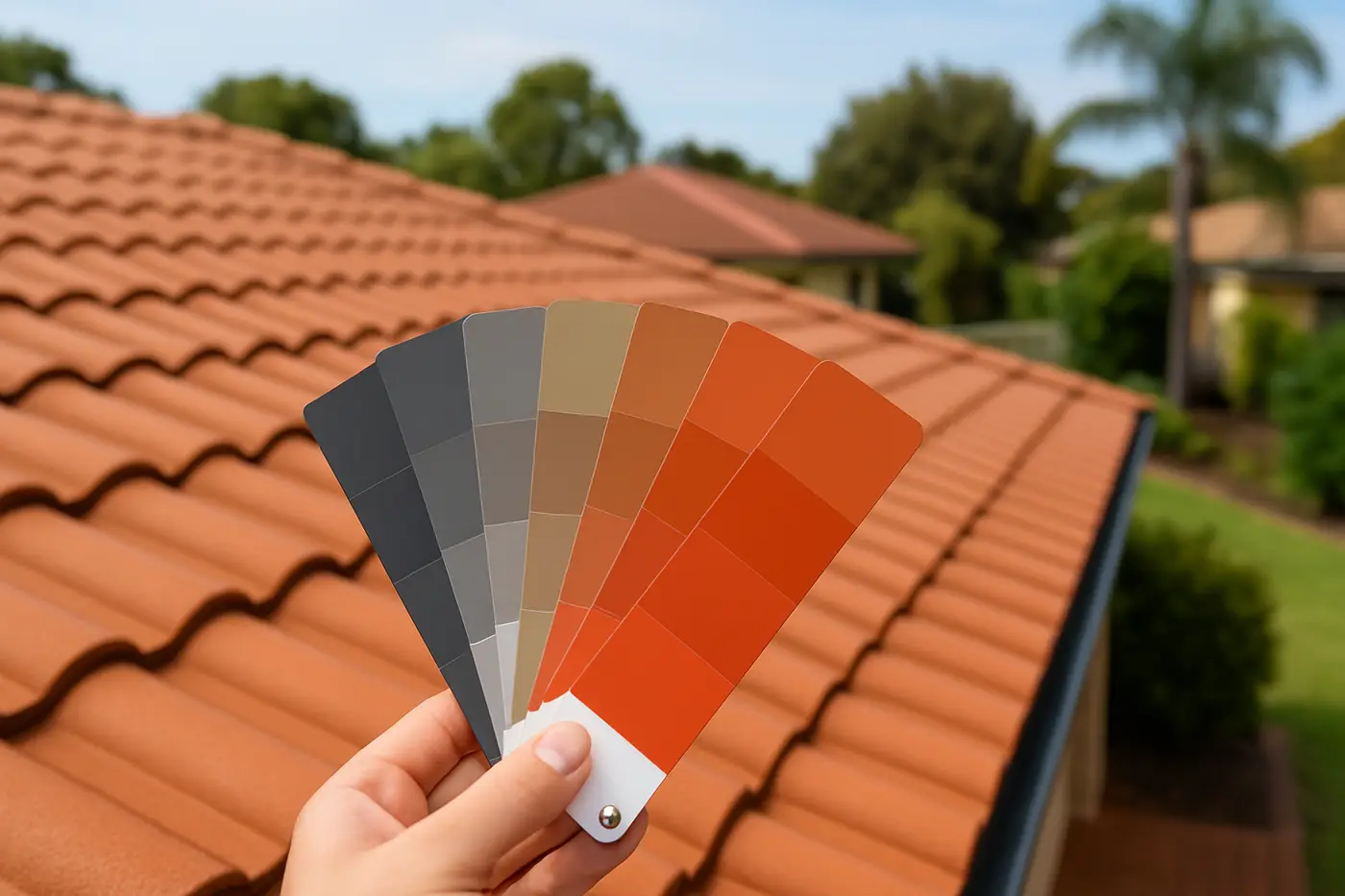
Roof painting is the most quote-sensitive job in Brisbane roofing. The same house can pull a $2,200 flyer-in-the-letterbox price and a $5,000 quote from an established company, and from the ground both finished roofs look identical — for about eighteen months. Then Queensland UV starts marking homework.
Here’s what roof painting in Brisbane really costs in 2026, what a legitimate system includes, and why the cheap version is the most expensive thing you can put on your roof.
The 2026 price band: $2,500-$5,500
For a typical single-storey, three-bedroom Brisbane home, professional roof painting lands between $2,500 and $5,500:
| Job profile | Typical 2026 range | Notes |
|---|---|---|
| Small single-storey metal roof | $2,500-$3,500 | Least prep if rust is minor |
| Standard concrete tile, single-storey | $3,000-$4,500 | Includes sealer + two membrane coats |
| Large or two-storey home | $4,000-$5,500 | Edge protection/scaffold, slower work |
| Heat-reflective membrane upgrade | +$500-$1,200 | Worth it on dark colours |
| Steep pitch (over ~26°) | +$400-$1,000 | Harness work slows every stage |
Remember the Queensland licensing line: work over $3,300 including materials requires a QBCC-licensed contractor, and most legitimate roof painting jobs cross it. The flyer quoting $1,990 flat is often structured to duck exactly that threshold — and the obligations that come with it.
What a real system includes (and what one coat skips)
Roof membrane manufacturers specify a system, and their warranties only hold when it’s followed:
- High-pressure clean — 3,000+ PSI to strip dirt, lichen and any failing old coating. Skipped or rushed cleaning is the number one cause of early peeling; paint bonds to whatever is on the surface, including dust.
- Prep by roof type. Concrete tile: replace broken tiles, treat moss, and apply a sealer/primer because old porous tiles drink paint unevenly. Metal: treat rust spots, replace corroded screws, spot-prime bare steel with the correct metal primer. Different substrates, different chemistry — a quote that doesn’t distinguish them is a spray job.
- Two full membrane coats, cross-rolled or sprayed at the manufacturer’s spread rate. Two coats isn’t upselling; it’s how the product reaches the film thickness its UV rating assumes.
Brisbane sits in UV extreme territory for a good half of the year. A single coat carries roughly half the designed film build, so it chalks, fades and lets go early — 18 months to three years is typical. That’s the whole economics of the cheap quote: one coat of a bargain acrylic costs the operator a fraction of a specified system, and by the time it fails the ute has a different phone number on the door.
Heat-reflective coatings: the upcharge that pays you back
The one genuine upgrade worth considering is a heat-reflective membrane — formulated to reflect infrared rather than absorb it. Expect to add $500-$1,200 to a typical job. What you get in Brisbane conditions:
- Dark roof surfaces can run 30-40 degrees cooler on hot days.
- Less heat soaking into the ceiling cavity means the air-con works noticeably less hard through January and February.
- Cooler surface temperatures also mean less thermal stress on the coating itself, which helps it last.
It matters most on dark colours (which absorb the most heat), on homes without sarking or ceiling insulation upgrades, and on bedrooms under low pitched roofs. If you’re choosing a colour anyway, pairing a lighter tone with a reflective membrane is the biggest comfort-per-dollar move on the quote.
Warranty tiers: read the actual coverage
Roof painting warranties come in tiers, and the gap between them is where value hides:
- Manufacturer product warranty — quality membranes carry 10-15 year ratings, but only when the specified system (sealer + two coats at spread rate) is applied. One-coat work voids it on day one.
- Workmanship warranty — the applicator’s own cover for surface prep and application failures, typically 5-10 years from reputable Brisbane companies. This is the one that answers the phone when paint peels.
- “Lifetime warranty” on a flyer — worth exactly as long as the company exists. Queensland’s roof painting scene has a long history of phoenix operators; an unverifiable warranty from a two-year-old ABN is marketing, not protection.
Ask two questions of any quote: which product, and how many coats? and who covers me if it peels in year three — you or the manufacturer? Hesitation on either is your answer.
Painting vs restoration: don’t seal problems in
Painting is the right job only when the roof underneath is sound. If your tile roof has cracked tiles, crumbling ridge mortar or rusted valleys, paint doesn’t fix any of it — it just makes the problems harder to see until they reappear as ceiling stains. That’s the real difference between the two products on the market:
| Option | Cost | What it includes |
|---|---|---|
| Roof painting | $2,500-$5,500 | Clean, minor prep, sealer, two membrane coats |
| Full roof restoration | $3,500-$8,000 | All of the above plus tile repairs, rebedding and repointing, rust treatment |
On a 60s-80s concrete tile roof that’s never had ridge work done, the honest quote is almost always a restoration, because the bedding and pointing are due regardless of the paint. Paying $3,500 to paint over failed bedding, then $2,500 the following year to have caps rebedded (and the fresh paintwork patched around), costs more than doing the restoration once. If the roof needs isolated fixes first, small roof repairs typically run $350-$900 and can be folded into the painting job.
The flip side: a structurally sound roof that’s simply faded — common on 90s-2000s homes — doesn’t need the full restoration price, and painting alone is the right-sized spend.
Timing and the storm season factor
Membrane coatings need dry surfaces and a rain-free curing window, which makes Brisbane’s April-September dry season the ideal painting window. Summer jobs get done, but afternoon storm cells force stop-start scheduling and rushed operators are tempted to coat over damp tiles — another early-failure recipe. Booking in the cooler months gets better availability, better curing conditions, and a finished, sealed roof before storm season tests it.
Get a number for your actual roof
Whether your roof needs paint, a full restoration, or nothing yet isn’t guessable from the driveway. A free roof inspection with a photo report shows you the tile surfaces, ridge lines and rust spots up close, and comes back with an itemised price for the right-sized job — not the biggest one. Book a free roof inspection online and find out what your roof actually needs before you compare quotes.