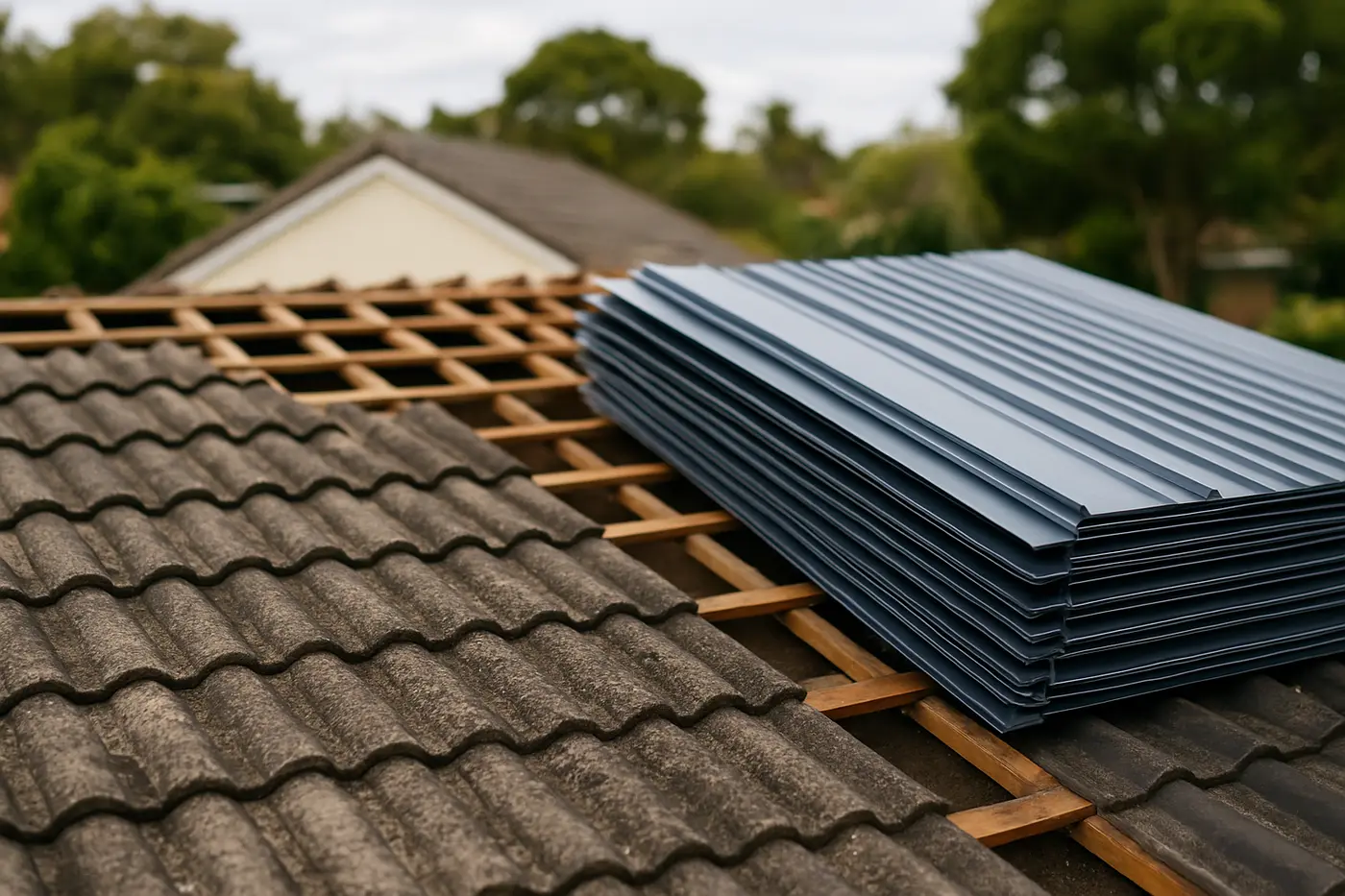
A new roof is one of the biggest single cheques most Brisbane homeowners will ever write on their house — and one of the least-shopped, because by the time you need it, you usually need it soon. The result is a market where quotes for the same job can differ by $15,000 and it’s genuinely hard to tell why.
Here’s how roof replacement in Brisbane is actually priced in 2026, what the big cost adders are, and how to avoid paying for the wrong things.
The 2026 numbers
For a full residential replacement, expect $18,000 to $45,000+ depending on size, material, storeys and what’s under the old roof.
| Replacement type (typical 3-bed, ~200m²) | Typical 2026 range | Notes |
|---|---|---|
| Metal-to-metal (like-for-like Colorbond) | $18,000-$28,000 | Fastest, simplest strip and re-sheet |
| Tile-to-tile (like-for-like concrete) | $20,000-$32,000 | Tile weight means minimal structural change |
| Tile-to-Colorbond conversion | $22,000-$40,000 | New battens required, structure often lightened |
| Large/two-storey or complex roofline | $35,000-$45,000+ | Scaffold, steep pitch, multiple hips/valleys |
| Asbestos roof removal (adder, licensed) | +$4,000-$10,000+ | Common on pre-1990 homes |
| New gutters, fascia and downpipes (adder) | +$3,000-$8,000 | Usually smart to do while the roof is off |
These are installed prices including strip, disposal, materials and labour from QBCC-licensed contractors — in Queensland, licensing is mandatory for building work over $3,300, which every roof replacement clears many times over.
Tile-to-Colorbond: why it costs more than like-for-like
The most popular Brisbane replacement isn’t like-for-like at all — it’s converting an ageing concrete tile roof to Colorbond. The conversion adds cost for structural reasons, not cosmetic ones:
- Battens must be replaced. Tile battens are spaced for tiles. Metal sheeting needs its own batten layout (usually steel top-hat battens), so the whole batten grid comes off and goes back on new.
- Sarking and insulation blanket. Modern practice puts sarking (a reflective foil membrane) under the new roof, and many owners add an anti-condensation insulation blanket under the sheets — worth it in Brisbane summers.
- Weight change paperwork. Going from ~50kg/m² of tiles to ~5kg/m² of steel is a structural change a certifier may need to sign off, depending on the job.
What you get back: a roof that’s dramatically lighter, effectively hail-shrug resistant compared to brittle old tiles, and typically good for 40-50 years. Whether that beats keeping tiles is covered in our Colorbond-versus-tile comparison — but on pure lifetime cost per year, both land in similar territory when installed properly.
The asbestos question on pre-1990 homes
If your house went up before 1990, budget time (and possibly money) for asbestos. Asbestos cement was everywhere in Brisbane construction — “super six” roof sheets, eaves linings, gable ends. Disturbing it during a roof strip is regulated work:
- Removal of more than 10m² of bonded asbestos requires a licensed asbestos removalist in Queensland.
- Sheets must be removed intact where possible, wrapped, and disposed of at a licensed facility — you pay for that handling and tipping.
- Typical cost adder: $4,000-$10,000+ depending on the area, access and disposal volume.
The red flag runs the other way, too: a quote on a 1970s house that mentions asbestos nowhere is a quote from someone who either didn’t look or plans to handle it badly. Ask directly how they’ll test and manage it.
Council, character overlays and heritage
Straight like-for-like replacement generally doesn’t need Brisbane City Council approval. But two situations do deserve a check before you sign:
Traditional Building Character overlay. Much of inner Brisbane — think pre-1947 Queenslanders in suburbs like Paddington, Annerley and Wilston — sits under character provisions. Changing roof material or profile on street-visible planes can require assessment, and corrugated profiles are often the expected finish. A tile-to-Colorbond change in corrugated profile usually fits character intent better than the reverse, but confirm before ordering steel.
Heritage-listed properties. Full heritage listing is a different tier again, with material and colour expectations. Factor approval time into the schedule.
A good contractor will flag overlay issues at the quote stage; if you’re unsure, the council’s online mapping shows overlays by address in minutes.
Repair, restore or replace?
Replacement is the right call when the roof surface itself has run out of life — tiles brittle and spalling across every plane, or metal sheets rusted through rather than surface-marked. If the damage is localised, roof repairs at $350-$900 a visit solve it for a fraction of the cost. If the surface is tired but sound, a full restoration at $3,500-$8,000 buys another 10-15 years.
The honest test: get an inspection with photos and ask the roofer to show you why the roof can’t be restored. “It’s old” isn’t a reason. Widespread cracking, delaminating tile surfaces, rusted-out valleys and fatigued fixings are.
Financing and timing the job
Nobody loves financing a roof, but a few practical points help:
- Payment structure is regulated. For contracted building work at this value in Queensland, deposits are capped (10% for jobs over $20,000) and payments should track progress. Never pay large sums ahead of work done.
- Get it contracted properly. Jobs over $3,300 require a written contract, and the QBCC Home Warranty Scheme premium should appear on it — that insurance protects you if the contractor vanishes or the work is defective.
- Insurance interplay. If hail or storm damage triggered this, run the insurance claim first — a cash-settled or insurer-managed replacement changes what you pay entirely. Don’t sign a private contract while a claim is open without advice.
- Timing. Winter (June-September) is Brisbane’s dry season and the best replacement window: stable weather, faster completion, better contractor availability. From October onward, storm season demand and rain delays both work against you. If your roof is marginal in August, don’t gamble on it surviving to April.
Getting real numbers for your roof
Every figure above is a range because every roof is different — pitch, access, structure, era and what’s hiding under the surface all move the price. The only number that matters is the one attached to your address.
Start with a free roof inspection with a photo report: you’ll see the condition evidence yourself, get a straight answer on repair versus restore versus replace, and receive itemised numbers you can compare like for like. Book a free roof inspection online and get the real figure before storm season makes the decision for you.