How we fix it
About this service in Brisbane
A roof coating in Brisbane lives a harder life than almost anywhere else in Australia. Subtropical UV works on the surface every day of the year, summer storm fronts drive rain at it sideways from November through March, and the humidity in between feeds moss and lichen on any face that stays shaded. That’s why a roof painted properly here looks good for well over a decade — and a roof painted cheaply starts peeling inside three years.
This page covers how a proper spray-applied membrane system works, what it costs across Brisbane in 2026, and how to tell whether your roof needs painting or something more.
What roof painting actually involves (when it’s done right)
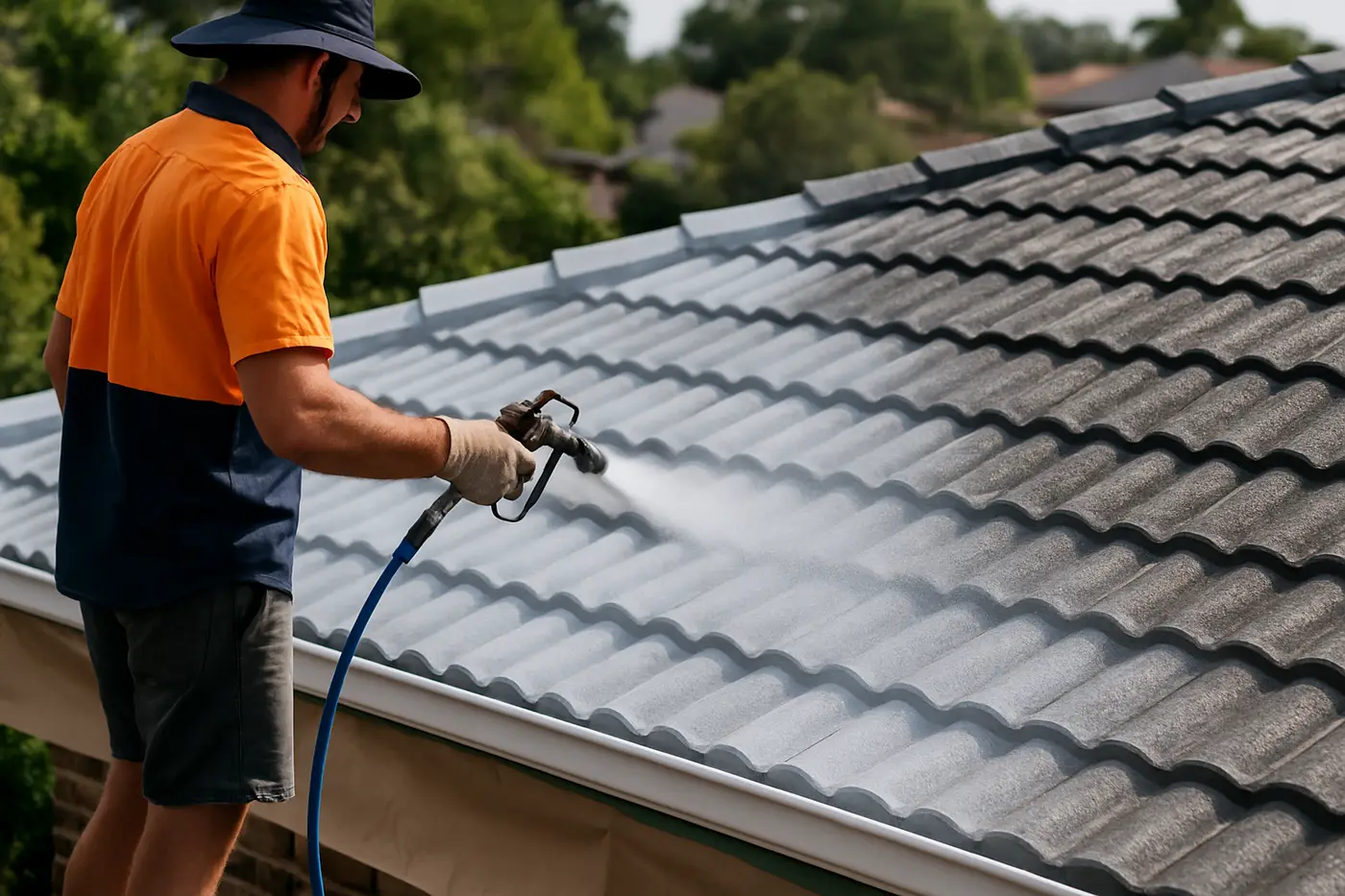
“Roof painting” undersells it. A modern roof coating is a flexible acrylic membrane, spray-applied in multiple coats to a specified film thickness, over a substrate that has been cleaned, repaired and primed. Every one of those steps matters:
Pressure cleaning
The roof gets high-pressure cleaned — typically 3,000-4,000 PSI — to strip off dirt, lichen, moss and any old coating that’s lost adhesion. On a chalked concrete tile roof this takes the surface back to sound material the primer can actually bond to. Skipping or rushing this step is the single most common cause of coating failure we see on Brisbane roofs painted by cut-price operators.
Repairs before paint
Painting over a broken tile or cracked ridge pointing doesn’t fix anything — it just makes the problem harder to see. Before coating, we replace cracked tiles, check the ridge capping, and on metal roofs swap rusted screws and re-seal flashings. If the ridge mortar is failing across the whole roof, we’ll tell you the job is really a roof restoration, not a paint job, and quote it honestly.
Primer and sealer
Concrete tiles made from roughly the 1960s through the 1990s — which covers a huge share of Brisbane’s housing stock in suburbs like Aspley, Carindale and Sunnybank — go porous as their original surface coat erodes. A penetrating primer/sealer binds that porous surface so the membrane coats key in properly. Metal roofs get an etch primer or rust-inhibiting primer depending on condition. Different substrate, different chemistry; there’s no one-tin-does-all shortcut.
Two membrane topcoats
Two full coats of acrylic membrane go on by airless spray, applied at the film build the manufacturer’s warranty requires. This is where the 10-15 year product warranties come from — they’re conditional on correct preparation and film thickness, which is also why we photograph each stage of the job.
Tile roofs vs metal roofs: different systems
Concrete tile is the ideal candidate for painting. The tiles themselves last 50+ years structurally, but their coloured surface layer erodes long before that. A sealer plus membrane system essentially gives the roof a new wearing surface.
Glazed terracotta is the honest exception. The fired glaze resists coatings, and a good terracotta roof generally looks better professionally cleaned and repointed than painted. If a contractor quotes to paint glazed terracotta without a very specific primer system and a warranty to match, walk away.
Metal and Colorbond roofs take coatings well once surface rust is treated and the sheet is primed correctly. Older galvanised and Zincalume roofs on post-war homes around Wynnum and the bayside — where salt air accelerates oxidation — respond particularly well to a rust-treatment-plus-membrane system, at a fraction of replacement cost. If rust has gone through the sheet, that’s a repair or replacement conversation instead, and we’ll say so.
Heat-reflective coatings and Brisbane summers
The strongest practical argument for roof painting in Brisbane isn’t cosmetic — it’s heat. A dark, aged roof surface gets ferociously hot under summer sun, and that heat radiates straight into the ceiling cavity. A light-coloured solar-reflective membrane reflects a far greater share of that solar energy, keeping the roof surface and the cavity below it cooler and easing the load on air conditioning through January and February.
Two things determine the result: the coating technology and — even more so — the colour. A pale reflective colour like Surfmist or Shale Grey will always outperform a dark colour in the same product range. If heat is your main motivation, choose light. Our guide to the best roof colours for Brisbane heat covers the trade-off with resale styling in detail.
What it costs in 2026
Across Brisbane, full roof painting typically runs $2,500-$5,500. The main variables are roof area, pitch (steep roofs need more safety gear and time), height (two-storey costs more than one), and condition (a badly chalked or previously-failed coating needs more prep). The pricing table above breaks it down by bracket, and our roof painting cost guide goes deeper on where the money actually goes.
Be wary of quotes dramatically under this range. The materials for a warrantable membrane system have a real cost; a $1,800 “full roof paint” is either thinned product, a single coat, or no primer — and it will look like it by the third summer.
Timing around storm season
Coatings need dry surfaces and a rain-free curing window. April to October is Brisbane’s painting sweet spot. From November to March, afternoon storms make scheduling less predictable — jobs still get done, they just take longer. If you want the roof cleaned, repaired and sealed before storm season tests it, book an inspection by September.
Book a free roof inspection
Every quote starts with us actually getting on your roof — checking the substrate, the ridge capping and any repairs needed, and bringing colour samples you can hold against the house. You get a fixed written price and photos of what we found. If your roof needs repointing or restoration rather than paint, we’ll tell you that instead.
Get a quote online or book a free inspection — northside, southside and the bayside, we cover the lot.