Skip to content

Brisbane Roofing Specialists

Roof Repointing Brisbane

Ridge capping rebedding and flexible repointing for Brisbane tile roofs. If your 60s-80s concrete tile roof has never been repointed, storm season will eventually do the inspection for you — book ours first.

  • Full inspection of every ridge, hip and gable line — with photos of what we find
  • Removal of cracked, drummy or fretting old mortar and pointing
  • Rebedding of loose ridge caps on fresh sand-cement bedding where needed
  • Flexible acrylic pointing over all bedding, colour-matched to your tiles
  • QBCC Licensed
  • Insured
  • Free Inspections
  • Written Warranty
  • 7 Days
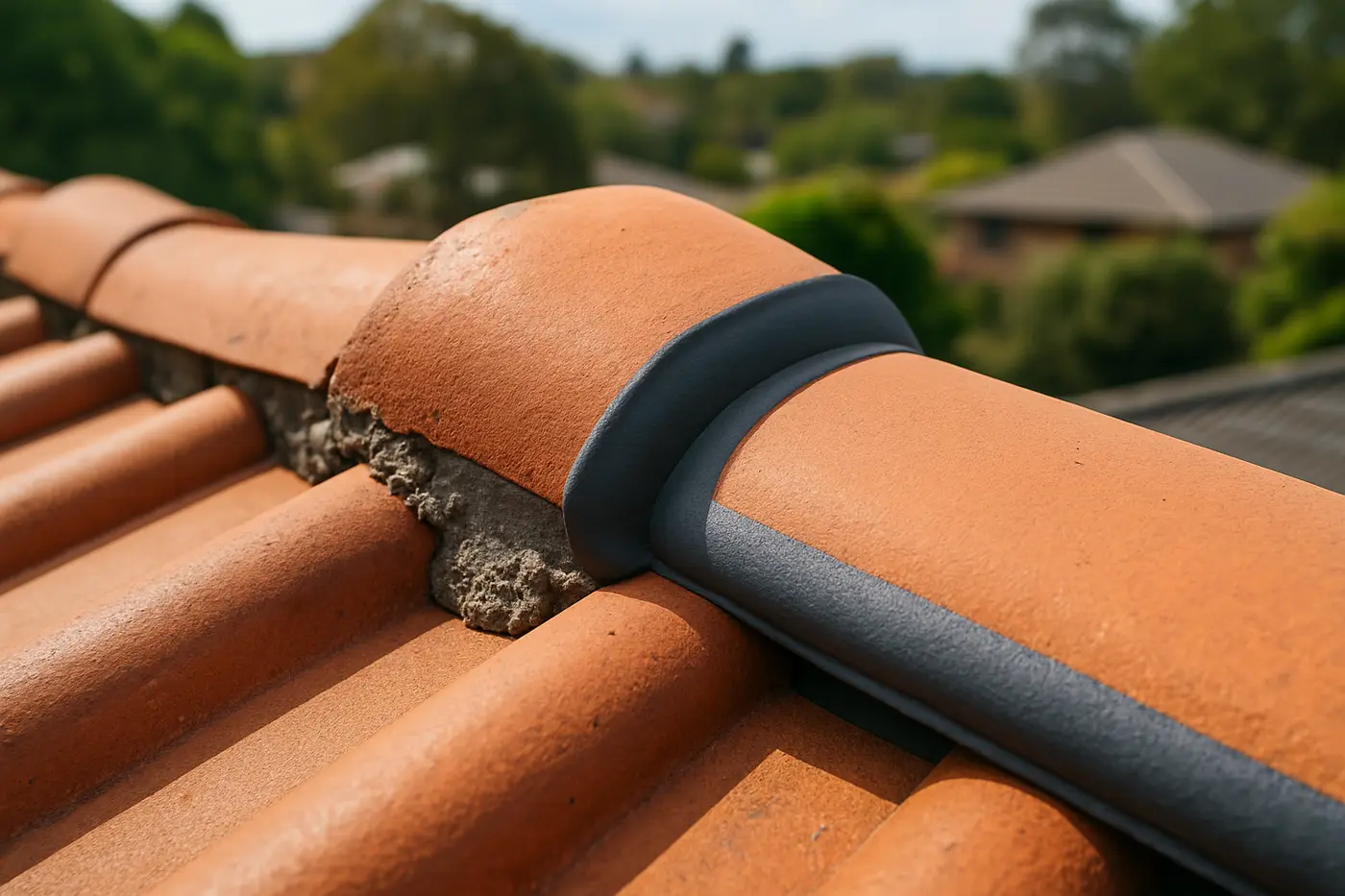
Ridge capping being repointed with flexible pointing beside crumbling old mortar

Free quote: Roof Repointing

Australian format - we'll text you to arrange your inspection.
Add brief description (optional)
How urgent?

Free inspection, photo report and quote. No obligation. Privacy.

What's included with our roof repointing service

Every job includes the basics below — no surprise extras tacked on when the invoice arrives.

  • Full inspection of every ridge, hip and gable line — with photos of what we find
  • Removal of cracked, drummy or fretting old mortar and pointing
  • Rebedding of loose ridge caps on fresh sand-cement bedding where needed
  • Flexible acrylic pointing over all bedding, colour-matched to your tiles
  • Loose or cracked ridge caps re-seated or replaced, valley and apex junctions sealed
  • Site cleaned up — old mortar off the roof, out of gutters, and off the ground
  • Written workmanship guarantee on all rebedding and repointing

When to get us out

Signs your roof needs attention

Not sure if it's urgent? If you're seeing any of the below on your Brisbane home, don't wait for storm season to find the weak point — a small leak becomes a ceiling repair fast.

  • Cracked or crumbling mortar visible along the ridge line from the ground
  • Chunks of grey mortar appearing in your gutters or on paths after rain
  • A ridge cap that looks crooked, lifted or out of line with its neighbours
  • Leaks or ceiling stains near the top of the roof or along hip lines
  • Your concrete tile roof was built 1960s-1980s and has never been repointed
  • Whistling or rattling from the ridge line during strong winds
  • An insurer, buyer's inspector or solar installer has flagged the ridge capping

Loose ridge caps are a wind hazard — and a licensing matter

A ridge cap held by fretting mortar can lift in the kind of wind gusts Brisbane storm cells produce every summer, turning a maintenance job into flying debris and a hole in your roof. Repointing and rebedding work over $3,300 in Queensland must be done by a QBCC-licensed contractor working to heights-safety rules — check any roofer's licence on the QBCC register before they start.

How we fix it

About this service in Brisbane

Stand across the street from almost any 1960s-80s brick-and-tile home in Brisbane — Sunnybank, Bracken Ridge, Tingalpa, take your pick — and look at the ridge line. If the mortar under the caps looks cracked, patchy or crumbling, that roof is running on borrowed time. Repointing isn’t a cosmetic touch-up; it’s the difference between a roof that shrugs off a summer storm cell and one that loses caps to it.

This page explains what bedding and pointing actually do, why virtually every concrete tile roof of that era needs this work eventually, what it costs in 2026, and how the job is done properly.

Bedding and pointing: the two layers that hold your ridge together

Every ridge cap, hip cap and gable end on a tile roof is held on by two layers:

Bedding is the sand-cement mortar course the cap physically sits on. It sets the cap’s height and line and carries its weight.

Pointing is the finishing layer applied over the bedding at the edge of the cap. It seals the joint against water and locks the cap down against wind.

When roofers talk about repointing, they mean stripping the failed outer layer and applying a modern flexible pointing compound. Rebedding means the caps are lifted entirely, the crumbled mortar bed underneath is removed, and the caps are re-laid on fresh bedding — then repointed over the top. Which one your roof needs depends entirely on the state of the bedding, and that’s a tap-test on the roof, not a guess from the driveway.

Why every 60s-80s concrete tile roof gets here eventually

Brisbane’s post-war building boom put concrete tile roofs on tens of thousands of homes, and nearly all of them used the same detail: caps bedded and pointed in rigid sand-cement mortar. The tiles themselves are good for half a century or more. The mortar isn’t — by design of its chemistry, not by anyone’s mistake.

A Brisbane roof surface can swing through enormous temperature ranges in a single day: cool overnight, brutally hot under summer sun, then suddenly quenched by an afternoon storm. Tiles, caps and mortar all expand and contract at different rates, and rigid mortar has zero capacity to absorb that movement. Hairline cracks open, subtropical rain gets in, UV and moisture cycles do the rest. After 30-50 years the mortar frets — crumbles to powder — which is exactly why you find grey crumbs in the gutters of a 1975 home in Ashgrove. If your roof is from that era and has never been rebedded and repointed, the question isn’t whether it needs doing. It’s whether you do it on your schedule or storm season’s.

Loose caps and storm season: the expensive way to find out

From November to March, Brisbane’s storm cells arrive with wind gusts that test every fixing on a roof. A ridge cap on sound bedding and flexible pointing barely notices. A cap sitting on fretted mortar is effectively loose — held by weight and habit — and a strong gust can lift it off entirely.

What follows is the worst-value sequence in roofing: an emergency call-out in the middle of a storm surge of demand, a tarp over the open ridge, rain damage to insulation and ceilings, and an insurance conversation about whether the roof was maintained. We handle plenty of storm damage roof repairs every season that trace back to ridge lines that had been visibly failing for years. Our storm season roof checklist exists for exactly this reason: the cheap time to fix a ridge is September, not January.

How we do the job

Inspection first. We walk every ridge, hip and gable line, tap-test caps for drummy bedding, and photograph what we find. You get a straight answer: spot repair, full repoint, or rebed and repoint — with a fixed price for the actual scope, not a worst-case padding.

Strip, don’t smear. Failed pointing and fretted bedding come off. Flexible pointing applied over crumbling mortar is the classic cut-price shortcut, and it fails in a year or two because the substrate underneath keeps disintegrating. If a quote seems too cheap, this step is usually what’s missing.

Rebed where the bedding has failed. Loose caps are lifted and re-laid on fresh, correctly gauged sand-cement bedding, straight along the line. Cracked caps are replaced with matching profiles — and if your cap profile is discontinued, we source seconds or salvage rather than leaving a mismatched lid on the roof.

Flexible pointing throughout. Every joint is finished in flexible acrylic pointing, colour-matched to the roof. Modern compounds bond to both cap and tile and flex with thermal movement instead of cracking — which is why they’re generally expected to last 15-25 years where rigid mortar managed far less in Queensland conditions.

While we’re up there, we check the rest of the roof — cracked tiles, valley condition, flashings. Ridge work often reveals the beginnings of other issues, and it’s cheaper to fix a cracked tile during the same visit than to mobilise again in six months.

What it costs in 2026

Typical Brisbane pricing: $1,500-$2,500 for full repointing where bedding is sound, $2,500-$3,500 for rebedding and repointing an average single-storey home, and $3,500-$5,500 where the roof is large, steep, two-storey, or needs a run of caps replaced. Spot repairs on a single ridge line start around $600. The honest variable is how much rebedding is needed — which is why anyone quoting a firm price without getting on the roof is guessing with your money. Our repointing and rebedding cost guide breaks down every line item.

Repointing is also the moment to think about sequencing: if the roof will want painting or a full restoration within a few years, doing the ridge work first (or as part of the package) avoids paying for access twice.

Book a free ridge inspection

If your roof is from the 60s, 70s or 80s and the ridge line has never been touched — or you’ve spotted mortar in the gutters — get it looked at before storm season does the looking for you. Get a quote online or book a free inspection. You’ll get photos of your actual bedding and pointing condition and a fixed written price, northside or southside.

Our process

From inspection to finished roof — four clear steps

How the job runs

Roof Repointing Brisbane

  1. 1

    Step 1

    Inspect every ridge line

    We walk the ridges, hips and gables, tap-test the caps, and photograph the bedding and pointing condition. You get an honest read on whether you need spot repairs, full repointing, or rebedding underneath.

  2. 2

    Step 2

    Strip the failed mortar

    Cracked and drummy pointing comes off, and where bedding has failed the caps are lifted and the old bedding removed completely. Patching over failed mortar is a 12-month fix at best — we don't do it.

  3. 3

    Step 3

    Rebed where needed

    Loose caps are re-laid on a fresh sand-cement bedding course, straight and correctly gauged. Caps that are cracked or delaminated get replaced with matching profiles.

  4. 4

    Step 4

    Repoint with flexible compound

    Every bedded joint gets a coat of flexible acrylic pointing, colour-matched to your roof. It bonds to cap and tile and flexes with thermal movement instead of cracking like rigid mortar.

Every job: workmanship warranty in writing · QBCC-licensed roofing · fully insured

Real Brisbane rates

What you can expect to pay

Honest pricing based on actual Brisbane market rates. Final quote always confirmed in writing after a free inspection, before any work begins — no hidden extras.

Job typeBrisbane range (AUD)
Free ridge capping inspection & quote$0
Spot repointing / storm-damage section$600-$1,200
Full roof repointing (bedding sound)$1,500-$2,500
Rebedding & repointing (typical home)$2,500-$3,500
Full rebed & repoint — large or complex roof$3,500-$5,500

Ranges reflect typical Brisbane metropolitan area pricing for 2026. Every job starts with a free inspection and a fixed written quote — the number you approve is the number you pay.

Where we cover

Roof Repointing Brisbane — by Brisbane area

Same service, same prices, all Brisbane metropolitan suburbs. Each area has its own roof stock and fault patterns worth knowing about — tap your area below.

What customers say about this service

Recent roof repointing reviews

Alan D.

Bracken Ridge

"1978 concrete tile roof, original mortar. They lifted and rebedded 14 caps, repointed the lot in two and a half days. Photos before and after every ridge. Found two cracked tiles while up there and swapped them for no drama."
2026-04-16

Meredith S.

Ashgrove

"Building inspector flagged the ridge capping when we bought. Quote was itemised — which ridges needed rebedding, which just pointing. No attempt to sell us a full restoration we didn't need. Work matched the quote exactly."
2026-06-30

Vince P.

Tingalpa

"Booked after finding mortar chunks in the gutters. Two-day job stretched to three because of afternoon storms, but they tarped the open ridge overnight and kept us updated. Pointing colour match is spot on."
2025-11-22

Rhonda G.

Sunnybank

"A cap came loose in a windstorm last summer and cost us an emergency call-out, so this year we did the whole roof properly before November. Straightforward crew, tidy site, gutters cleaned of old mortar before they left."
2026-08-11

Common questions

Roof Repointing Brisbane — your questions answered

  • What's the difference between repointing and rebedding?
    Bedding is the sand-cement mortar course the ridge caps actually sit on — it holds them in place. Pointing is the finishing layer over the bedding that seals and locks the joint. Repointing replaces that outer layer with modern flexible compound; rebedding means lifting the caps and re-laying the mortar bed underneath first. If the bedding is sound, repointing alone is enough. If caps are loose or the bedding has crumbled, pointing over it is a waste of money — it needs rebedding first.
  • How much does roof repointing cost in Brisbane?
    Full repointing on a typical Brisbane home runs $1,500-$2,500 when the bedding underneath is still sound. Where caps need rebedding as well, expect $2,500-$3,500 for an average single-storey home, and more for large, steep or two-storey roofs or where caps need replacing. Spot repairs on a single ridge start around $600. We quote a fixed price after a free inspection — our repointing and rebedding cost guide has the full breakdown.
  • Why do 1960s-80s concrete tile roofs all seem to need repointing?
    Because they were all built the same way: ridge caps bedded and pointed in rigid sand-cement mortar. Mortar has no flexibility, and a Brisbane roof expands and contracts daily through 40-plus-degree surface temperature swings. Over 30-50 years those cycles crack the mortar, water gets in, and the freeze of movement, moisture and UV turns it to powder — what roofers call fretting. It's not a defect in your particular roof; it's the designed lifespan of the material arriving on schedule.
  • How long does flexible pointing last?
    Quality flexible pointing compounds are generally expected to last 15-25 years in Australian conditions — several times longer than a rigid mortar re-run — because they flex with thermal movement instead of cracking. Lifespan depends on correct application over sound bedding: flexible pointing smeared over crumbling bedding fails early, which is why we assess the bedding before quoting.
  • Can loose ridge capping really come off in a storm?
    Yes, and every Brisbane storm season proves it. A cap sitting on fretted mortar is held mostly by its own weight. The wind gusts that come through with November-March storm cells can lift caps clean off, leaving an open ridge that funnels the following rain straight into your ceiling. A large share of the storm damage calls we attend start at a ridge line that had been quietly failing for years. Getting ahead of it before November is dramatically cheaper than tarps, emergency call-outs and ceiling repairs after.
  • How long does repointing a roof take?
    Most full repointing jobs are one to two days. Rebedding and repointing a typical home usually takes two to three days depending on the number of hips and ridges, access, and weather. Summer scheduling has to work around afternoon storms since bedding and pointing need time to set dry.
  • Will repointing stop my roof leaking?
    If the leak is coming from the ridge or hip lines — cracked pointing, gaps under caps, fretted bedding — then yes, that's exactly what repointing fixes. But leaks near the ridge can also come from cracked tiles or rusted valley irons further down the roof. Our inspection covers the whole roof, not just the ridges, so you fix the actual source rather than the most visible symptom.
  • Do you match the pointing colour to my roof?
    Yes. Flexible pointing comes in a wide colour range, and we match to your tile or cap colour so the ridge lines don't stand out as fresh stripes. If you're planning to paint or restore the roof afterwards, we can point in a neutral shade that coats over cleanly — worth mentioning at the inspection so the sequence is right.

Need roof repointing in Brisbane?

Get a free Brisbane quote in under 60 seconds.

QBCC-licensed Brisbane roofers, seven days a week. Tell us your suburb and what's happening up there — we'll come back fast with a quote and an inspection time.